Helping Faculty Thrive
Dennis Mitchell discusses the evolution of the Office of the Vice Provost for Faculty Advancement and its new programming to address anti-black racism, homophobia, and other pressing issues.
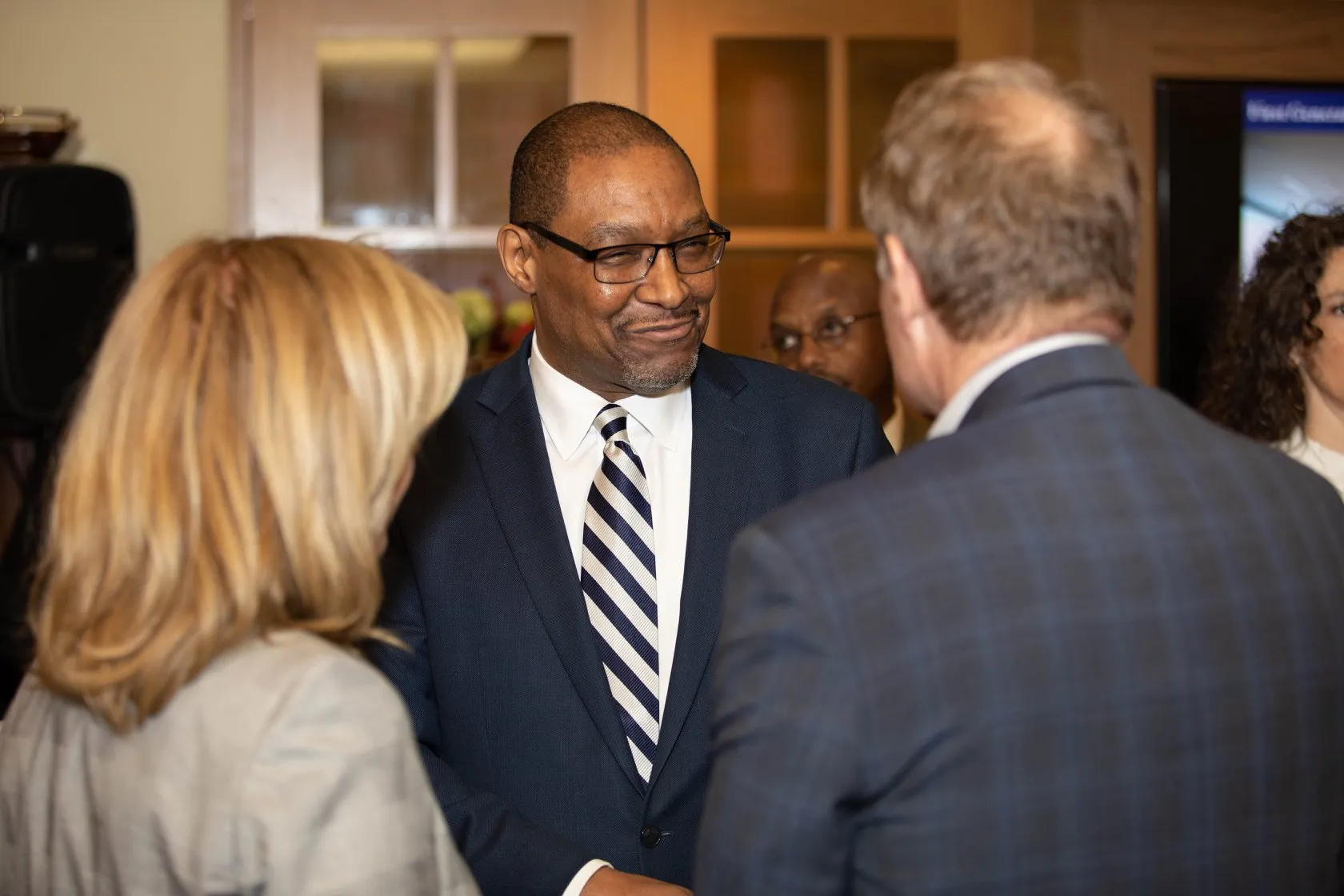
Although Dennis Mitchell has served as vice provost since 2014, his role and team's portfolio since then have grown. Dennis reflects on what his team has accomplished and what he sees on the horizon for the Office of the Vice Provost for Faculty Advancement.
Your portfolio originally focused exclusively on diversity and inclusion but has expanded to encompass faculty advancement. What did that change mean?
As you know, we initially came to the Office of the Provost in 2014 to lead the faculty diversity and inclusion portfolio, which incentivizes schools, departments, deans and chairs to recruit outstanding scholars who are women and underrepresented faculty.
That is still a central focus and crowning jewel. We are pleased to note that even through the hiring freeze, Target of Opportunity hiring was accelerated.
But we expanded beyond recruitment efforts, focusing on offerings that can benefit all faculty, like career development programming on navigating the road to tenure, time management, how to use social media to advance professionally, and more. We also oversee broader efforts to promote faculty well-being through the Office of Work/Life.
In addition to providing valuable information and discussion, we hope our events build community.
How has the pandemic changed your work?
Although the nature of our work is the same, the shape it takes evolves as we respond to the circumstances.
To help build the sense of community many of us miss, we created our Virtual Faculty Lounge, a Slack channel for faculty. To give faculty face-to-face connections, we also host an unmoderated online faculty coffee break.
To help address the climate issues that could come about when we may be interacting exclusively on Zoom, we released Best Practices for Inclusive Remote Work in the Academy, which is an addendum to the Guide to Best Practices for Departmental Climate. This text offers guidance for maintaining an inclusive climate in these unprecedented circumstances.
One aspect of that guide that is very important is that we encourage leadership to adapt and be supportive of colleagues, especially as we have gotten glimpses of others’ life challenges through Zoom. That is especially important from a diversity and inclusion perspective because, although everyone has some trauma in throughout the pandemic, that trauma is not evenly distributed and iniquities often fall along familiar lines.
In the past year, in the wake of the murders of George Floyd, Breonna Taylor, among many others, the Black Lives Matter movement has gained momentum and faced backlash. How has your office responded to this?
This has been an extremely painful time for the entire community. However, I have been heartened to hear from faculty of all disciplines and backgrounds looking for opportunities to help combat structural racism.
To help offer some guidance and structure, we launched a series of initiatives called Addressing Racism: A Call to Action for Higher Education, intended to spark real change by empowering more members of our community to contribute to the diversity and inclusion work that has traditionally been spearheaded by smaller teams dispersed across the University.
The project launched last summer with a large panel discussion followed by a mini-institute for full-time faculty on structural racism and anti-oppression work. Shortly thereafter, we began awarding seed funding for projects that address racism within and beyond academia.
It is my hope that this will lead to lasting, impactful change.
What challenges do you and your team face?
Change is never easy. We, as a University, are living a legacy built over centuries. It takes ongoing, concerted effort to make change within the context of such history.
And what’s more, efforts have to be targeted. There is no single, Columbia-wide approach to climate issues because there is no single Columbia culture —we are made up of an array of schools, centers, institutes, offices, and more, each with its own micro-culture and microclimate.
To have an impact, we have to work within the framework of a unit and develop targeted efforts that are mindful of the preexisting culture. So what works for a department at A&S will not necessarily map perfectly onto a division within the medical school.
This is challenging and time-intensive work, but it is rewarding work that makes a lasting difference.
Your office has launched a series of guides, and the newest, The Columbia University LGBTQ+ Guide: Resources to Foster an Affirming Community for LGBTQ+ Faculty and Staff, has generated tremendous online traffic and interest on social media. That is not common for an administrative resource. Why do you think this guide is a particular success?
First, I think because it is a much-needed resource gathering and information from disparate sources at this decentralized University.
But what I think makes this guide especially impressive in my opinion, is its scope. Whether you are a faculty member hoping to support your LGBTQ+ students, an established queer scholar, or a straight, cis-gendered staff member who hopes to be a better ally, there is something to learn in the guide. We have everything from actionable to-do's to express allyship to listings of LGBTQ+ organizations, to summaries of the LGBTQ+ scholarship happening in all parts of the University.
The impressive scope of the guide is, in part, the result of the process. Adina Brooks and Jen Leach involved more than 40 faculty, students, and staff in developing this guide. They transcribed interviews and let the voices of our community shape the product.
Although the product, like all of our guides, is a living document and a work-in-progress, I am especially proud of this one. I think my team really modeled the collaboration and inclusivity we hope to instill in others.
What are your goals for the future?
At this point, it’s time for us to start thinking about securing long-term resources for the diversity initiative. I think we are in early stages of thinking about how to have a sustainable endowment to try to move this forward and make it a permanent fixture at the University.